Showing posts with label admin. Show all posts

Class 15 info

Next week - Monday 5th February - we will be thinking about museums as a medium for science communication. To help us do this our (double) class will be based in the Science Museum.

Please don't forget that we are meeting at 12 just inside the main entrance to the Science Museum, rather than our normal classroom.

ucl seminars

UCL's Science and Technology Studies seminars this term. The one on the 26th Feb might be relevant to this course.

please note...

...there is a change to the published class schedule this term. Monday 5th February will now be the session on museums and science centres (involving a trip to the Science Museum; more details to come), and Monday 12th will be the class on popular science. Both are double sessions.

demos expertise pamphlet

To bring something out of the comments to the last post, there's a new pamphlet from Demos on expertise. Students might find it useful as further reading for some of the policy and PEST orientated topics we've been covering this half of the term, including the assignment (if you are choosing to design a dialogue-for-policy event).

To quote from the introductory blurb on their website:

Opening-up needs to mean more than showing people how expert advice works. Opening-up needs to mean open-mindedness, it needs to mean asking new questions and it needs to mean listening to a much wider range of perspectives.
Have a happy holidays - remember Humanities are all moving offices this week, so you can't expect to find us in the same place next term.

new layout

Yes, we have a new layout - I'm taking advantage of Blogger Beta. This means we have "labels" to help navigate the blog (useful as it gets bigger) - so you can press the "class summary" label to only get the overviews of lectures, or the one to show only posts from other students, etc...

I've gone back to old posts and given key labels, but it might take a while to link everything up. New posts are and will be fully labelled.

Those blogging next term, if you want to specify labels to your post, do so. If not I'll allocate them.

public engagement with medical genetics

It's easy to forget, when we just look at examples of science communication, that there is an academic field focussing on the interactions between science and its publics. People do the kind of ethnographic work that Bruno Latour did on public engagement with science. (As well as Alice and mine's weird and wonderful research.) We run a research seminar to showcase some of this research - from inside and outside the SCG. This Wednesday Dr Alex Plows is coming along to talk: if anyone is interested let me know and I can give you the room details. Her seminar abstract is below...

"Snap-shotting" public engagement with medical genetics (genomics): overview of key findings and issues

The talk will feedback the findings of a 3 year research project 'the emerging politics of human genetic technologies' - ethnographic/ qualitative research - see www.lancs.ac.uk/fss/cesagen/politics/

Medical genetics (genomics) is a broad, complex and rapidly developing field comprising many different (potential) applications- biobanking, genetic testing, etc. Multiple publics are engaging with medical genetics in many different ways. This talk will provide an overview of key "prime mover" groups and networks, identifying key issues and core frames. A core finding is that to construct any actor group as simply "pro" or "anti" biotechnology fails to map the sophistication, range, context- dependency, and cultural and political situated-ness, of actor responses (see Irwin and Wynne 1996, Wynne 1995, Bauer and Gaskell 2003).

blog entries

A few people have said they are a bit lost about writing their blog entry. My simple answer is don't be. There isn't a secret criteria for it that I'm hiding for you to second-guess. Plus it's only 200-250 words and counts for a tiny % of your mark.

Find something in public culture that mentions science, i.e. not an article in Nature or anything else aimed at an audience of just scientists. Write about it.

You could introduce something you've spotted and think other members of the class might be interested in. Or you could take the opportunity to rant about something that's been annoying you for a while (note: ranting in the final essay will not be well received, now is the chance to get such things off your chest).

There are loads of things that reference or explain science which you could write about: art, tv and film (fiction and otherwise), all sorts of weird and wonderful websites, podcasts, blogs, shampoo adverts, just about anything... You can just take yourself to one of the museums on your lunch break. This listings site of science in London might also be useful. You can try looking at some of the science related blogs linked to on the sidebar and look at a few of the posts Sarah and I have done, but don't feel limited by these at all.

Try to keep it reasonably simple, 200 words isn't enough to get complicated in, and even if you are writing about something as widely known as television adverts, you'll need to spend at least a couple of sentences introducing it. It's always helpful to keep in mind what your audience is - it's your fellow class members.

Make sure nothing is offensive. If I think it is, I'll send it back to you and get you to rewrite before it goes up (you'll be marked on the one that goes up). Also, I expect a reasonably formal use of the English language - I'm not expecting Shakespeare, just avoid "txt-isms", etc.

If you want to include photos that's fine too (as long as they are your photos). Blog entries in cartoon or even rhyming forms are also fine, at the very least it'd make us laugh.

Any other questions, comment or email me. I won't mark drafts, but you can pitch an idea to me, see what I say (my answer will almost certainly be "that's fine").

what is science?

No assignment this week, so no reason not to have done the reading for next week's class (especially as it's an extra short paper). This one will involve a trip to the library as we aren't allowed to put the digital version on WebCT. It should be easy to find, though - go to Level 3, walk to the back and look for Social Studies of Science. You want volume 30, number 1, p.158-160 - the paper is by Bloor and Edge and is called 'Knowing Reality through Society'. You could even scan it yourselves for free.

We're going to be talking about what science is, how it works, and what it means to work in it; so you might want to start thinking about that. You could have a look at some science blogs (I found an interesting one from a PhD student here) or have a browse in the library's philosophy of science section. Plus, if you've done a year in industry or been involved in the UROP programme, be thinking about your experiences as I think they may be useful to us.

Class 5: Considering the public and media effects

After concentrating on the production of news texts so far in the course, this week we turned our attention to their reception and consumption by audiences and publics. We started with a discussion about violent video games and the effects they might have: opinion was divided but most people thought that other factors (such as home background or upbringing) would also help define how games changed behaviour.

We then talked about two different models of the public: a 'deficit model' which was used in the more traditional PUS movement, and the public as active. Drawing on Wynne's 1991 paper (the set reading for this week), we described the importance of context in how science is recieved. These models will affect how we 'do' communication; we'll be talking more about that in a couple of weeks time.

Finally we talked briefly about effects research and the difficulties of doing it. The media may well be powerful but it's very hard to establish a causal connection between what's in the news and our attitudes, beliefs and knowledge. If anyone's interested further, you should check out McQuail (316.77 MAC on level 5 of Central Library).

If anyone's still having trouble accessing WebCT, you need to contact IC service desk (service.desk@imperial.ac.uk).

Your assignments should be back with you in two weeks time (the 20th).

And - by the way - the picture is of an empty vessel. Like the deficit model of the public...

news values climate change

The news media is often accused of sensationalism, especially around science issues. A really interesting example of this recently was the IPPR report accusing the media of "climate porn".

But if sensationalism is all the consequence of news values, are the media excused? I think climate change is an interesting case study in this. The IPPR say the sensationalism over climate change is dangerous because the public think it's too late to do anything. But then maybe we need things exaggerated to scare us into small changes. And it's not as if scientific opinion is especially settled over how close we are to environmental armageddon.

Is there a place for sensationalism? If so where? Warning: one of the press release assignments last year was marked down quite severely for being "too sensationalist" (not by me, but you have been warned).

p.s. apologies about the WebCT problems. We've been assured that students just need to advice here and here, and if there are still problems contact IS.

Class 4: the media and the transformation of knowledge

In today's double session we looked at how scientific information changes as it moves between different kinds of publication. We started by looking at some extracts from places like Science, the BBC website, or the Science Museum's Antenna. Amazingly, we could spot what was from where - so good are we at picking up on the internal cues and signals that tell us whether something is textbook or news.

We had a brief overview of Fahnestock's analysis of the changes between scientific paper and 'popularisation': a shift in genre from forensic to epideictic; appeals to 'wonder' and 'application'; and an increase in certainty and in uniqueness. We also discussed news values - factors that media scholars think journalists use to decide what is newsworthy. After some analysis of newspaper cuttings, it looks like values such as negativity, relevance, personalisation, facticity, and threshold are importantant for science stories.

Good papers to read to support today's topics are Fahnestock 1986 (on WebCT) and Hilgartner 1990.

And finally we gave out Assignment 1, due next Monday 6th November. Students are to produce a press release based on one of the four science stories on WebCT. If you read the instructions carefully and remember what we've talked about in terms of newsworthiness and journalistic style, you'l be fine...

Comment or email us if you have any problems!

Being a humanities student


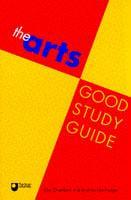
For those of you who aren't used to/are panicking at the thought of being a humanities student (reading outside of class! Essays! Words not numbers!), we have a book recommendation that could help you out. (This was meant to go on the reading list as suggested reading, but got left out for one reason or another.) Check out The Arts Good Study Guide, by Ellie Chambers and Andrew Northedge and published by the OU Press. This has got some really clear and readable advice on things like how to read productively (in science you can get away with reading just the abstract and discussion; in the humanities that's not always such a great idea...) and how to write essays. We especially recommend chapters 4 and 5 before you write your essay (Assignment 4) - if you're not used to having to argue your case it's very helpful on things like structure and style. And even better, there are copies in Imperial Library (Central Library level 5, reference 371.3 CHA).

Of course, news language is a different kettle of fish entirely. The best way to get good at that before you write your own press releases for Assignment 1 is simply to read lots and lots of news...

Class 3: intro to press releases

The central point of today's session was that to write a good press release you need to consider what would make a good news story. Reading through the advice from Tim Radford I handed out last week should help, as will some of the content Sarah's discussing next week.

In terms of the more "nuts and bolts" issues we covered today, you should remember the "pyramidal format" (i.e. that you can cut a news story from the bottom up) and the need to clearly state the "what, why, who where, when and how" of the story as soon as possible. We also did an activity with a news story I had added words to, aiming to edit it back into decent news language (you can read the proper full version here).

Next week, Sarah will handout the first assignment, which is due the following week and asks you to write a press release. I handed out a few example press releases in class, it's worth looking at some before you write your own. UCL have a good press release archive. It's also worth googling science-rich universities and checking out AlphaGalileo. This has a database of research news from all over Europe, but (unless you are a journalist) you won't be able to access "notes for editors" or embargoed press releases.

Any questions - leave a comment or email me.